


Bud Gambrell
Aug 4, 2026
With so much technology, never forget where music began.
In the last article, I wrote about how change is unavoidable. After I finished that section and the rest of the article, it got me thinking about the physical change in music. I don’t mean the chord progression or the layers in mastering. None of that technical jargon; I really don’t know anything about it. I mean the change in how the public consumes music. Simply put, how you buy or listen to music.
Music for public consumption has changed in so many ways just in my lifetime. Here we go again. Don’t tell me I’m old. I already have that information. (Kind of a laugh) I won’t go into the history of recorded media. I will just cover some of the things that have changed in my lifetime. Let’s go back to the 1970s.

Let’s begin in your car. At one time, cars only had AM radios, if that. AM radio was good for listening, if you didn’t mind the lack of quality and a little static. It never sounded very clear. One good thing about it was that at night you could pick up radio stations from far away. I remember picking up a station from Chicago. I could occasionally pick up Spanish-speaking stations. Of course, I had no idea what they were saying, but I suppose it was the novelty of hearing a radio broadcast from that far away.

Then, in the 1970s, cars started coming with AM/FM radios. That made a huge difference in the quality of what you were listening to. The music became more vibrant. The one drawback was that it didn’t carry well over long distances. Hence, the names of the two account for the differences. AM stands for amplitude modulation, or power. AM radio stations used megawatts to boost the signal strength. They could push that signal further with higher power. FM stands for frequency modulation. Simply put, FM broadcasts focused on frequency instead of power. The drawback was that a mountain or a row of buildings could block or weaken the signal. Ok, enough of the classroom jargon.
If you were around in the 1970s, can you remember the first time you saw a car with an 8-Track player and an AM/FM radio? That gave the driver control over what they would listen to. The 8-Track format wasn’t great by today’s standards, but it was portable music. What a wonderful concept! In the blink of an eye, cars began to have AM/FM cassette players. It seemed like that person had won the lottery to have such a luxury. The cassette player added so much. They eventually came with auto-reverse, which meant it would play to the end and change sides. It was a technological marvel!

Move forward a couple of years, and CD players became the luxury to have in your car. Eventually, they became the norm. I remember taking out stock AM/FM radios and installing a CD player. Now, we are in total control. We can skip directly to the next song. If you had some type of mental disorder, you could make it play one song on repeat. I never used that function. I’m not saying I do or do not have a mental disorder.

Cars today have gone way beyond all of that. My car has more music options than I could ever want. Sidenote: I didn’t buy that car for the music options. I bought it for the gas mileage. Although when I first heard about a car with a hard drive, I wanted one. My car has an AM/FM radio with XM and a separate CD player. It also has an SD card slot that plays MP3 files. I have a 128GB card loaded with hundreds of full-length albums. I also have a USB port that charges and plays MP3 files. My 18-year-old self would have had a meltdown if I knew all of that would one day be possible. Mind-Splosion!

Now that we have covered the portable music options, let’s go into your house and explore. I will skip the talk about 78 rpm vinyl. I didn’t live in that era. I did, however, live in the 33 rpm era. Most people already know that 33 rpm is an album, LP, or vinyl. The Long Play was big back in the 1960s and 1970s. It ultimately lost the battle to the compact disc in the 1980s and 1990s. In the last few years, vinyl has made a resurgence. Anyone who calls themselves an audiophile demands vinyl. I once had a large collection of albums. I kept them in those peach crates that were so popular. Those crates worked great. You could stack them, and you could also pick one up and move it. That was about as portable as vinyl got.

I believe I was in high school when I was introduced to the 8-track. We spoke about that earlier, but it had uses outside your car. Home entertainment centers had a player. I had a portable player. I had to feed it eight D-size batteries. It went through those D cells like it was hungry! I really thought I was the cool kid! That player had a top handle. This was pre-boombox. The player would split into two separate speakers linked by a cord, of course. It was something else. I could take it anywhere, as long as I had D batteries. I would occasionally take it to school and stand over it like I was King Author standing over the Holy Grail. I exaggerate just a little, but you get the idea.

Portability in music grew from there. With the development of the cassette came smaller players. Those smaller players grew larger as the boombox craze took hold. Music was on the move. Can you remember the first time you saw a friend with a Walkman cassette player and headphones? Your parents must be rich? That was only the beginning of that evolution.

That cassette Walkman evolved into the Discman, a CD pocket player with headphones. But don’t jump around too much. Those early models would skip. It was still very cool to have. Then, of course, that evolved into the MP3 player. Those iPods were and still are expensive. How much did you spend on one before it was finally possible to play anything you wanted on your phone? That’s a long journey in a relatively short period of time. Portable music went from the 8-Track tape to your phone streaming a service in 30-40 years. I liked so much about the old ways, but I have to admit that I absolutely love that SD card slot in my car.

There are so many things I miss about buying albums. One of the biggest is the sense of connection with friends. It was the moment when a friend placed a vinyl record on the turntable platter, dropped the needle, and you listened to the new release together. That leads me to the record store. The joy of getting paid on Friday and going to the record store to flip through LPs is lost on anyone who didn’t get to experience it. You can still do that today, but it just doesn’t feel the same to me. I will not mention any names or store names, but there was a local record store in Huntsville that was, let’s say, awesome! I would cash my paycheck on Friday. There was no direct deposit. I would deposit enough to write checks to pay bills. I would keep a little spending money. I would stop by this specific record store. I could go in, browse the new releases, and pick out an LP or two. I could also buy a bag of weed. You can’t beat one-stop shopping. I was good to go for the rest of the night.
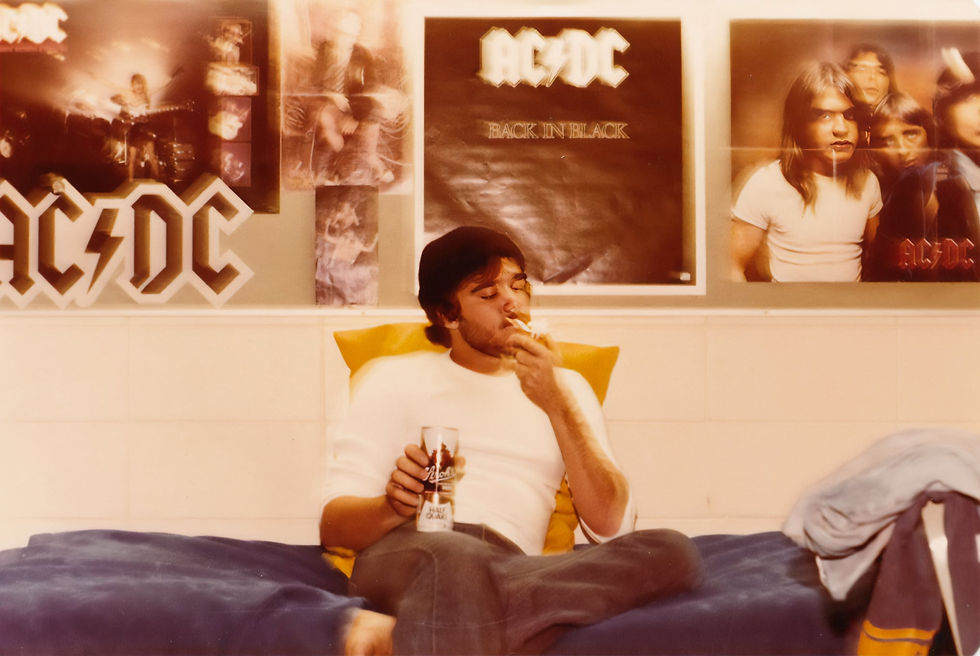
That leads to the bonding part. If you grew up back then, how many times did you sit with a friend, drop a needle, and listen to an album? Okay, how many times have you done that recently? I bet that number is much lower today. The LP gave so much more than a CD and even more than a stream, particularly a stream. I have never been able to look at the artwork of an album or single from a stream. Do you remember ripping the shrink wrap off that album and sliding the slip cover out? Look at those pictures, those credits or liner notes, the lyrics, or maybe you got one with the plain white slipcover. I hated that. I remember seeing the album at a friend's, seeing the artwork, only to buy it and get home to plain white. Bummer! With that friend, or friends, you would drop that needle and settle in. We would pass around the cover and the slipcover. You can almost get that from a CD, but it’s just so dang small.

This also leads us to the subject of your in-home stereo. Once you had the large console stereo, which was both large and, I suppose, decorative. It contained everything. On the front were the speakers, and you could slide the top open to reveal the turntable and radio dial. From there, the home stereo evolved into the component setup. Man, I loved those. You had to have the receiver and speakers at a minimum. A cassette player could be added, or, if you were really fancy, you could add a dual cassette deck. Of course, before the cassette player, there was the 8-track player. To round it all out, you had to have a good turntable. In my opinion, that was a must-have! I also went so far as to add an equalizer. I liked to mold the sound just a little more than the stock tone knob on the receiver.

Home listening has changed so much. To make things simple, you can add an Amazon Echo or a Google Nest. You can walk in and tell it what to play. It’s almost like witchcraft! You can also buy turntables that connect via Bluetooth. You no longer need a receiver. You can simply connect to a speaker and play your vinyl.

These days, you don’t need to go to the record store to pick up the newest and hottest release. You have digital radio in your home. XM radio can be in your home, too. You can also have your streaming service on demand. “Alexa, play…? Alexa, skip that song.” Or the other, I think, is, “Hey Google, play…” It’s so easy. It just feels less personal to me. Where are the liner notes? Where’s the kinship? “Alexa, let’s pretend I’m bonding with a friend.” (chuckles) There are even music channels on your cable or satellite subscription. There are so many ways to get the music, which, a few short years ago, was a bit more limited.
While we have mentioned television, let’s take a look at it. Everything in media starts somewhere; TV is no exception. Just look how far it has come in one lifetime. From small black-and-white sets in one family room to large LED TVs in every room in the house. I’m not sure, but I think the first TV our family owned was around 13” and was black and white. Can you imagine trying to watch TV on a 13” black-and-white? Your computer monitor is likely larger than that. For comparison, the TV in my den is 65”. And we have a total of three. That may not be considered many compared to some. Just as a guess, I think my brother has seven TVs throughout his house. He just installed four 55” TVs in his shop to work in a mesh together. That is a total of 8’ wide and 5’ high. I wish I had that old 13” to place beside that for comparison.

Now, let’s look at the many changes in how you can access music on that TV. When I grew up, there were only four channels. The four major networks, CBS, ABC, and NBC, along with PBS, the public station. Then came cable, which expanded the lineup to thirteen channels. How will we ever find anything to watch with so many channels? Music was not easy to come by. You might catch a musical act on Ed Sullivan, Laugh-In, or Hee Haw. But the drawback was that there was no recording device. You got to see it only once. There was also Lawrence Welk, but that show was for mom. Johnny Carson would also have musical guests if you were lucky enough to stay up that late. The point is that the choices were limited on any given day.

As the early to mid-seventies arrived, The Midnight Special and Don Kirshner’s Rock Concert debuted. Both shows aired late at night as well. I believe they ran on Friday or Saturday nights. Those shows were so cool. They featured concert clips from the day's popular bands. I think we would have worn out any VHS tape we could get our hands on for those shows if a VCR had been invented yet. The only way to see a performance a second time was if you were lucky enough to catch a replay six months later. I have even bought a collection of The Midnight Special on DVD to relive some of those nights. It was so long ago that I don’t remember specifics, but I remember staying over at a friend's and sneaking downstairs for a peek.
The doors to TV music entertainment opened in the 1980s when a cable channel called MTV first aired. It was the talk of the town. Everyone wanted to watch MTV and see the newest, and sometimes weird, music videos. I say weird because music videos were new, and in an attempt to be creative, they sometimes came out strange. VH1 was formed to compete for MTV viewers. VH1 always seemed a little less radical than MTV. Who stayed up late at night to watch Headbangers Ball on MTV? Not long after MTV and VH1 came CMT. You could now watch country music videos as well. The evolution of music and TV was well underway. Another advancement in music on TV is the cable channel AXS. This is a channel that actually plays music. MTV needs to change its name. AXS has concerts or music-related programming all the time.
With the introduction of the VCR, or video cassette recorder, came another new world. There was also Beta-Max, but for whatever reason, VHS became the champion of the video cassette format. It was now possible to record MTV if you had that cable channel. I remember not having it on cable in Huntsville, so when we went on vacation in Florida, it was on cable there. The TV was turned on, and you found the MTV channel. Also, with the VHS format came recorded concerts. Do you mean I can watch an entire concert of my favorite band at home? Yes, you could. You might even find a concert video for rent at the local video rental store. VHS wasn’t a high-quality format, but it took us to a place we hadn’t been yet. Another advancement in music on TV is the cable channel AXS. This is a channel that actually plays music.

Another format launched, but for whatever reason, it didn’t stick. The laser disc was introduced before the DVD. I never owned one, but I have seen one, and its resolution blew away VHS. Those are two big mysteries in the home entertainment world. Why did Beta-Max and laser disc fail? Both had superior quality to the competition, VHS, but never took a foothold.

The DVD and eventually the Blu-Ray took home music to a new level. You could now watch that live concert of your favorite band in your home with clear visuals and sound. The DVD concerts were wonderful! I have a collection of them in my TV cabinet. The Blu-Ray even improved that quality even more. But I would bet the average person cannot tell the difference side by side. They are both very good. Most cable companies also offered the DVR option with their boxes. You could now record programming without a VCR. They began with a small amount of storage, but eventually grew to large storage capabilities.
The next advancement in that type of technology was YouTube. With YouTube, you no longer need that DVD player. All you have to do is log in and search for whatever you want to see. YouTube seems to have most anything music-related. If you want to watch the new video, just search for it. You will then get sidetracked by all the video suggestions that appear along the side.
Of course, the latest advancement is streaming. If you have a subscription, you can stream anything. I’m sure I’m not the only one who, during the COVID lockdown, streamed a live band performance. Bands were itching to play but had nowhere to play, so they turned to live streams. That was good, but not great. It didn’t have the same live energy. With streaming, you can also buy entire albums that are never pressed as hard copies. Those recordings are online only. You can pre-buy new recordings. There are so many ways that streaming and the internet have advanced the music industry.
Are all of the advancements better? In terms of availability, I would say yes. In other ways, I would say no. When I purchased an album and went to play it, I had to look at the songs on each side and decide which side to play. On a digital album or CD, you simply press play. I feel something was lost in all of the technical advances. I could tell you what album a song was on and which side it was on. It’s different now. I think the names of the songs get lost when you don't inspect which side to play. When you simply press play, you may not even know the names of the songs, unless you are a true fan. You can’t get anything past a true fan of a band.

Of all the digital downloads you have bought this year, do you remember specifics about them? Do you remember the cover art? There is no walking into the record store and seeing it on the “New Release” shelf. Times have changed, but I think a few things have gotten lost in translation. I can still remember the first time I heard RUSH 2112. I can still remember hearing someone play Thin Lizzy at a party and checking out the album cover. I can remember seeing the first Molly Hatchet album in the record store. That dark rider on the back of the war horse. What is this? I can remember walking into JCPenney with my little brother and buying KISS Dressed to Kill. I can still remember going to the record store the day AC/DC Back In Black was released. My dad was so pissed when I brought that one home. I remember the first time my friend played AC/DC 'If You Want Blood, You Got It'. Listening to that band and looking at that cover was jaw-dropping. Nowadays, no friend is walking into the room with an album under his arm saying, ‘Check this out!” In my opinion, you don’t retain memories like that when buying a download.
I hope that, if you're old enough, I got you to pause and reflect. Our music was harder to get to, and at times it was so much simpler, but doesn’t it feel a little more organic in the way we went about it? Don’t you want to call that old best friend and invite them over? Maybe spark a doobie and put on side one of Dark Side of the Moon? I think we need to be open to moving into the future with all the advances and luxuries, but don’t forget where it all started. It all started on vinyl and seems to have come full circle back to vinyl. Maybe the past wasn’t so bad.





Until next time,
Keep your diamond down in the groove!
Where to find Bud:
Website:
https://bgambrellphotography.com
Amazon:
Facebook:
https://www.facebook.com/bud.gambrell
